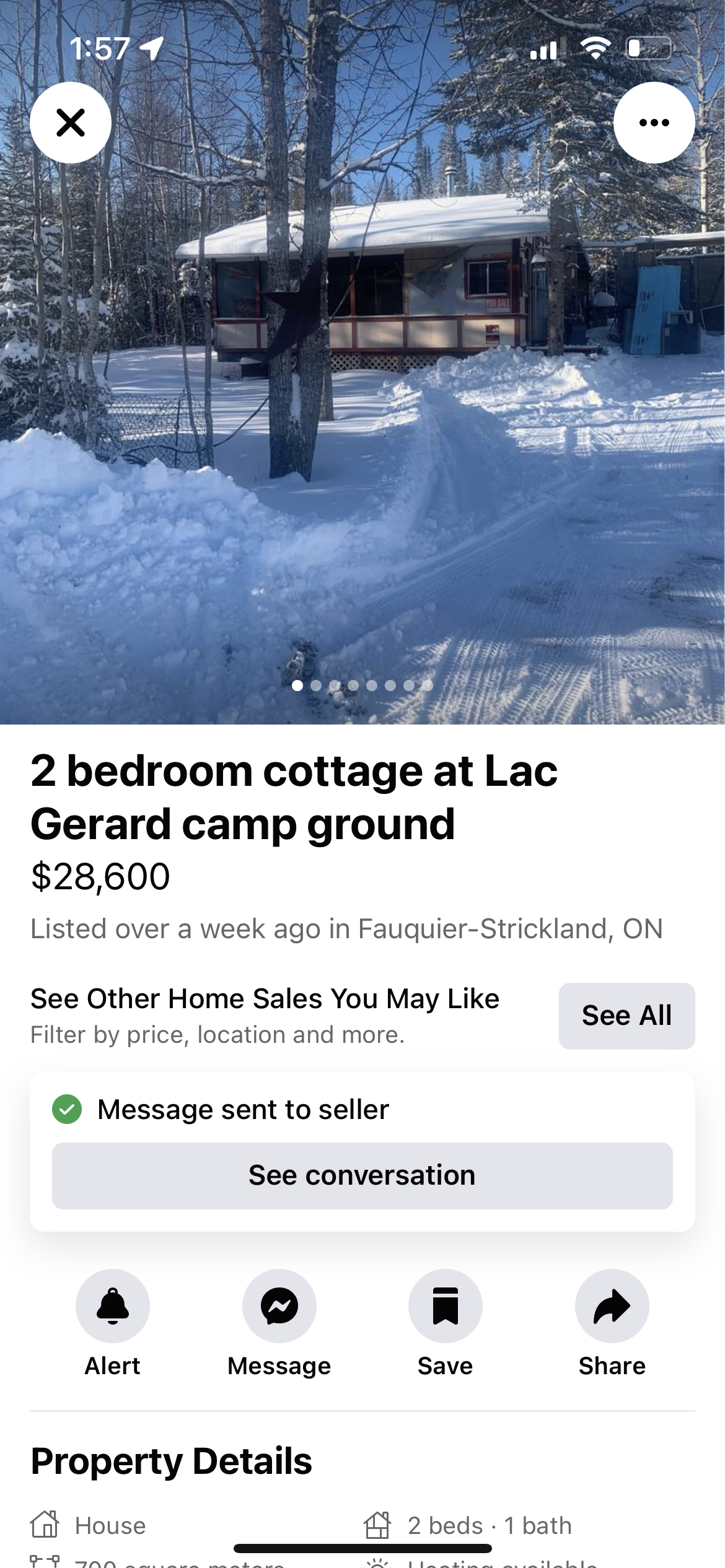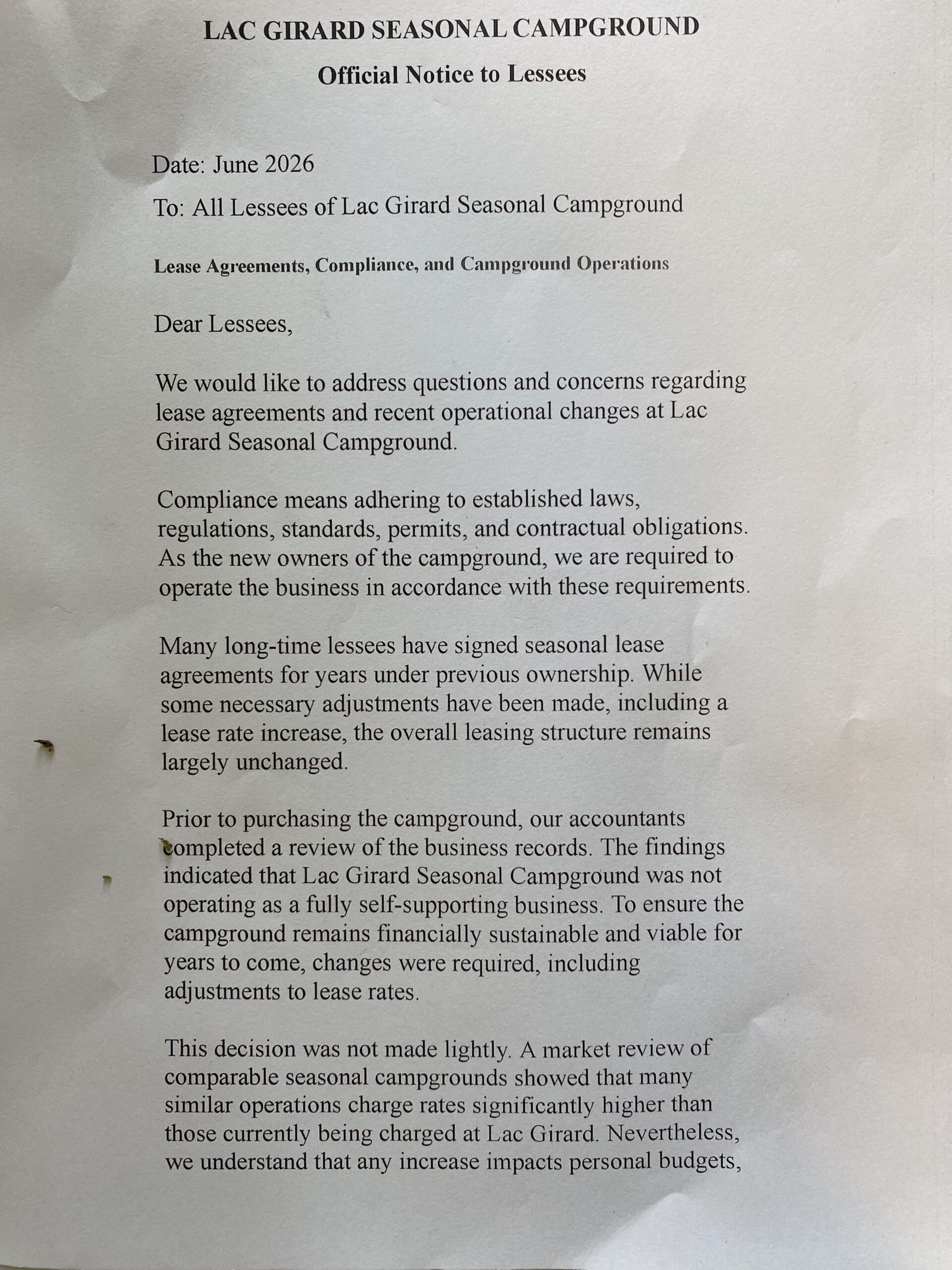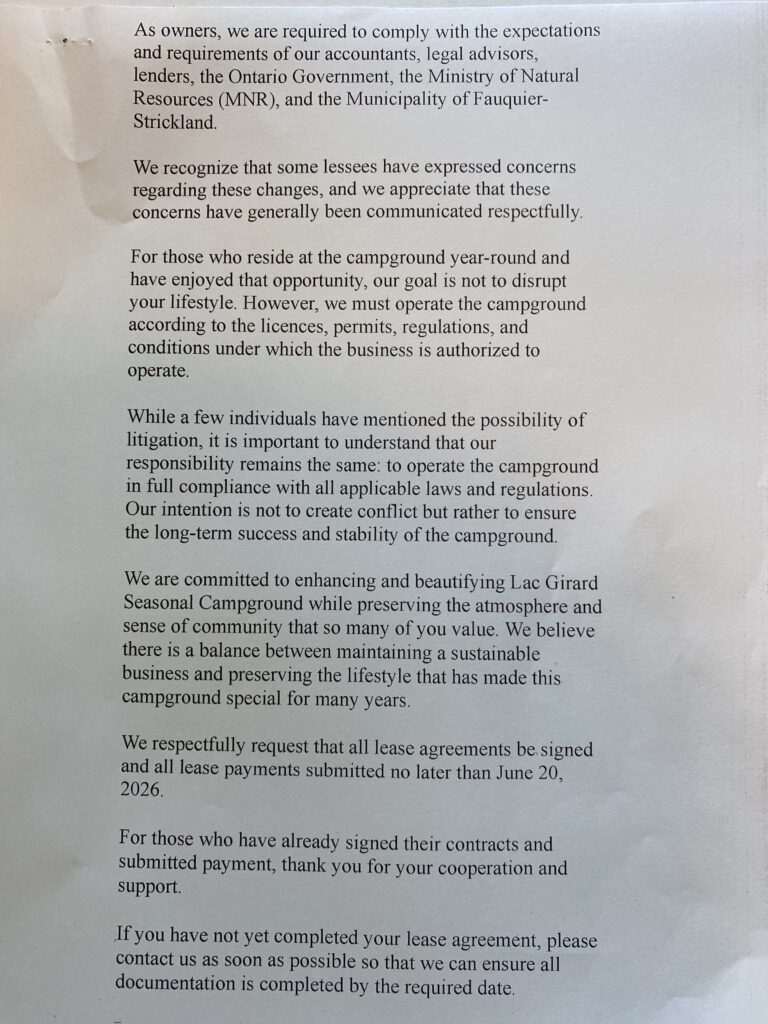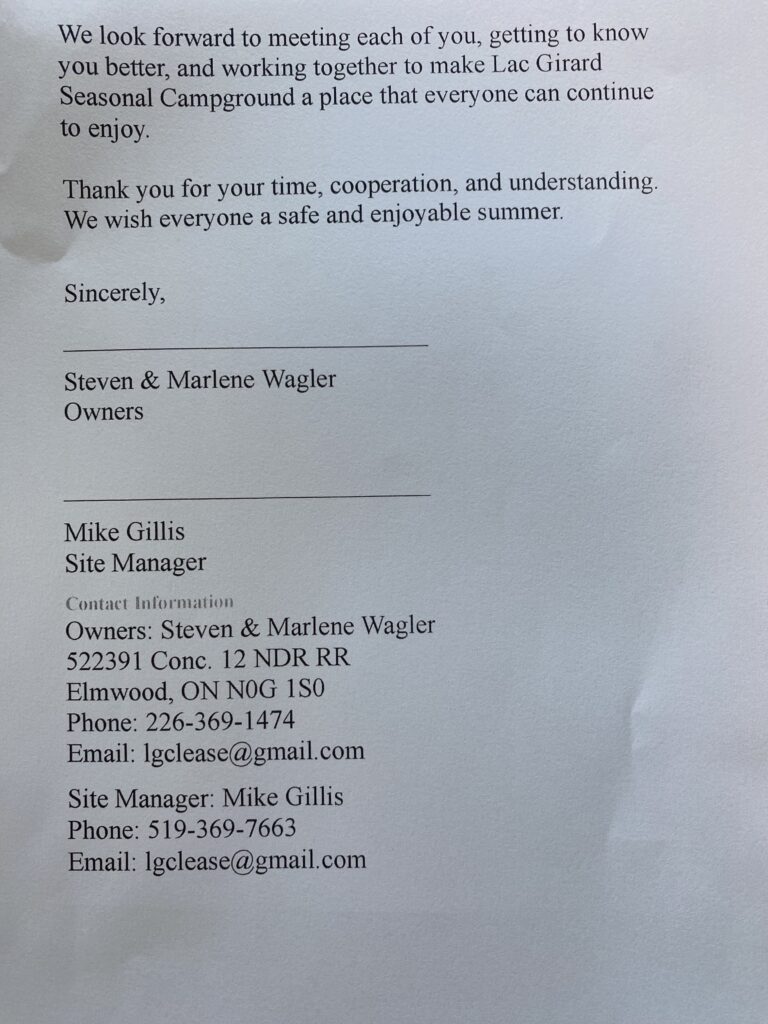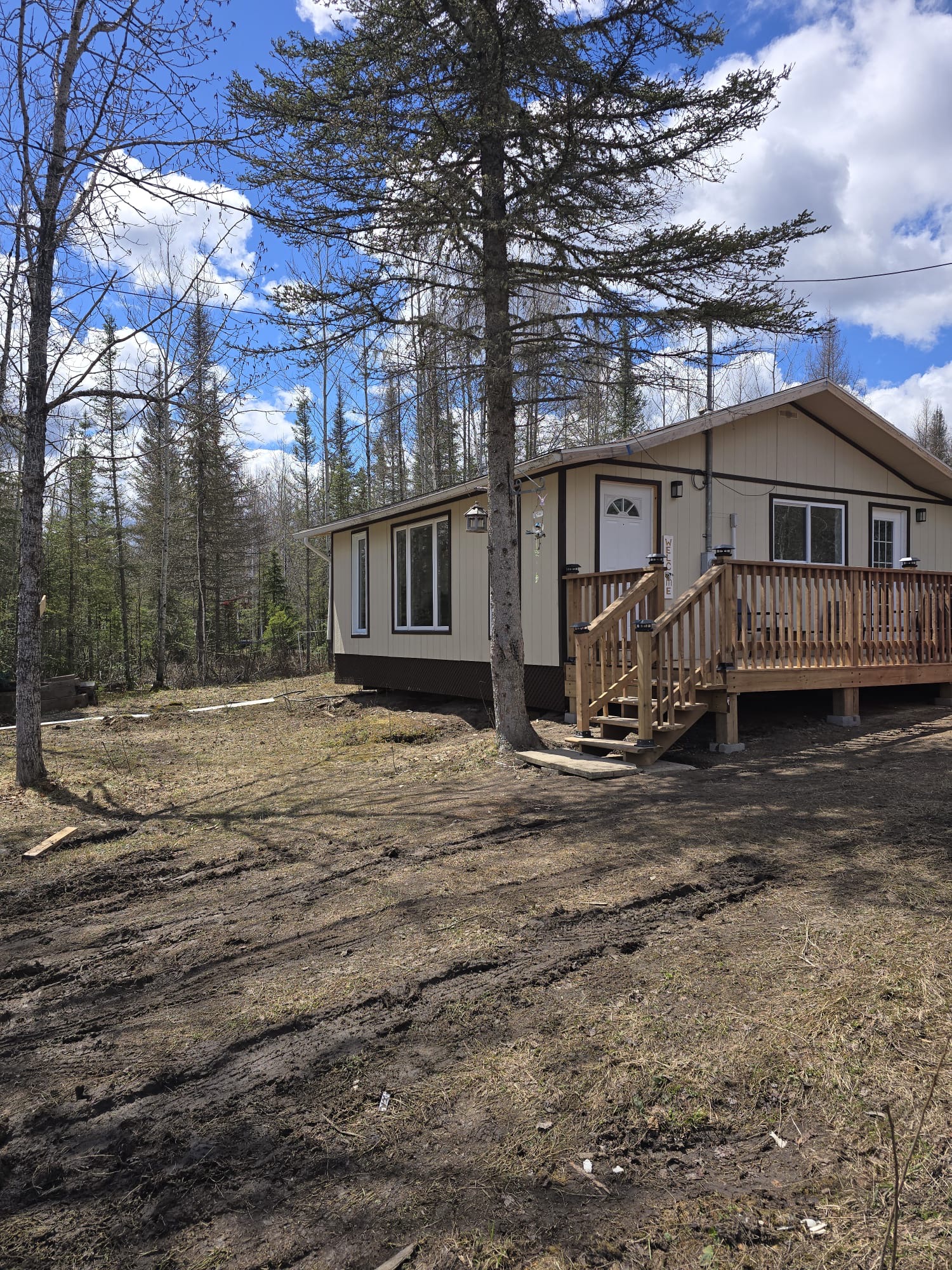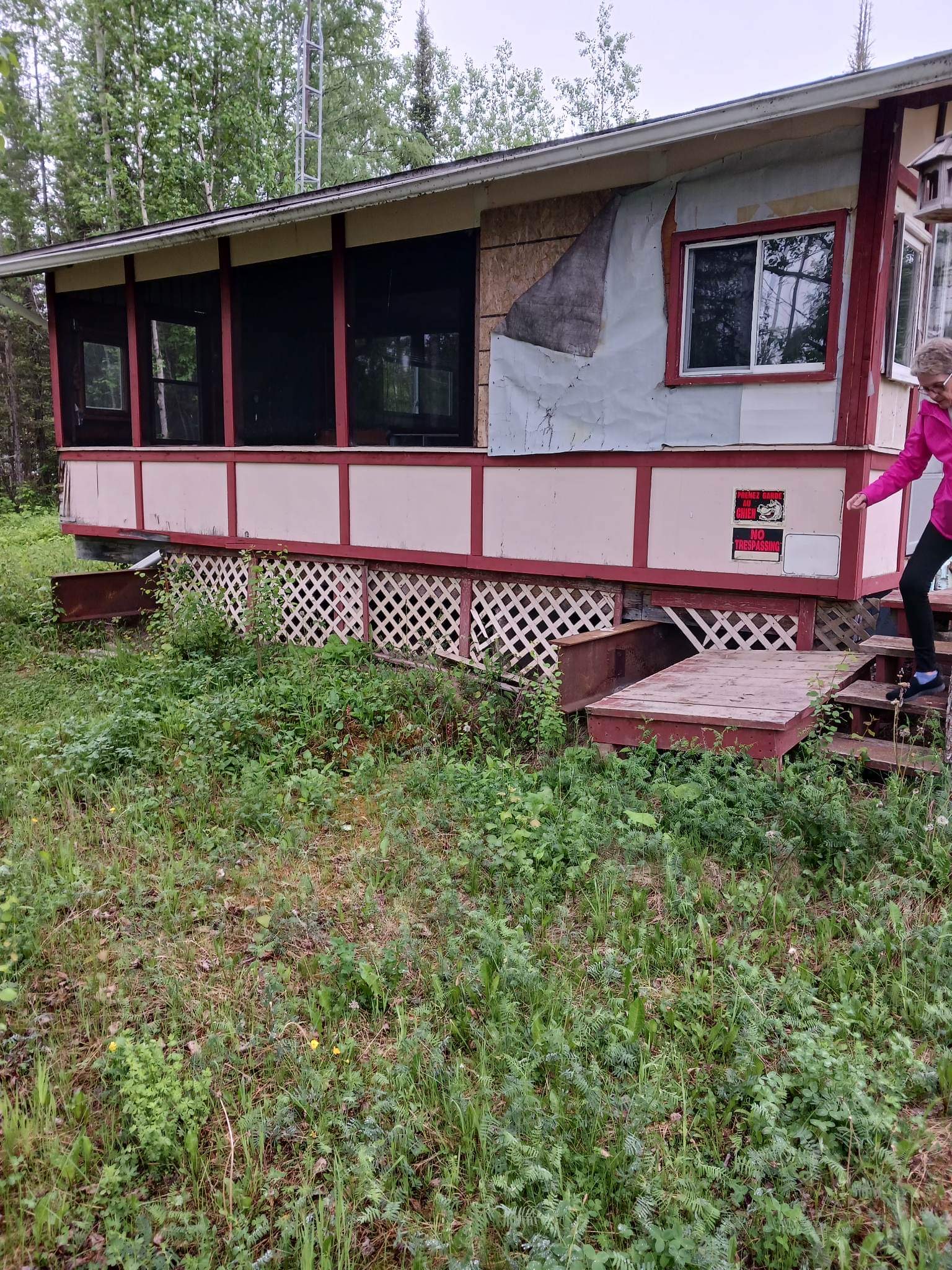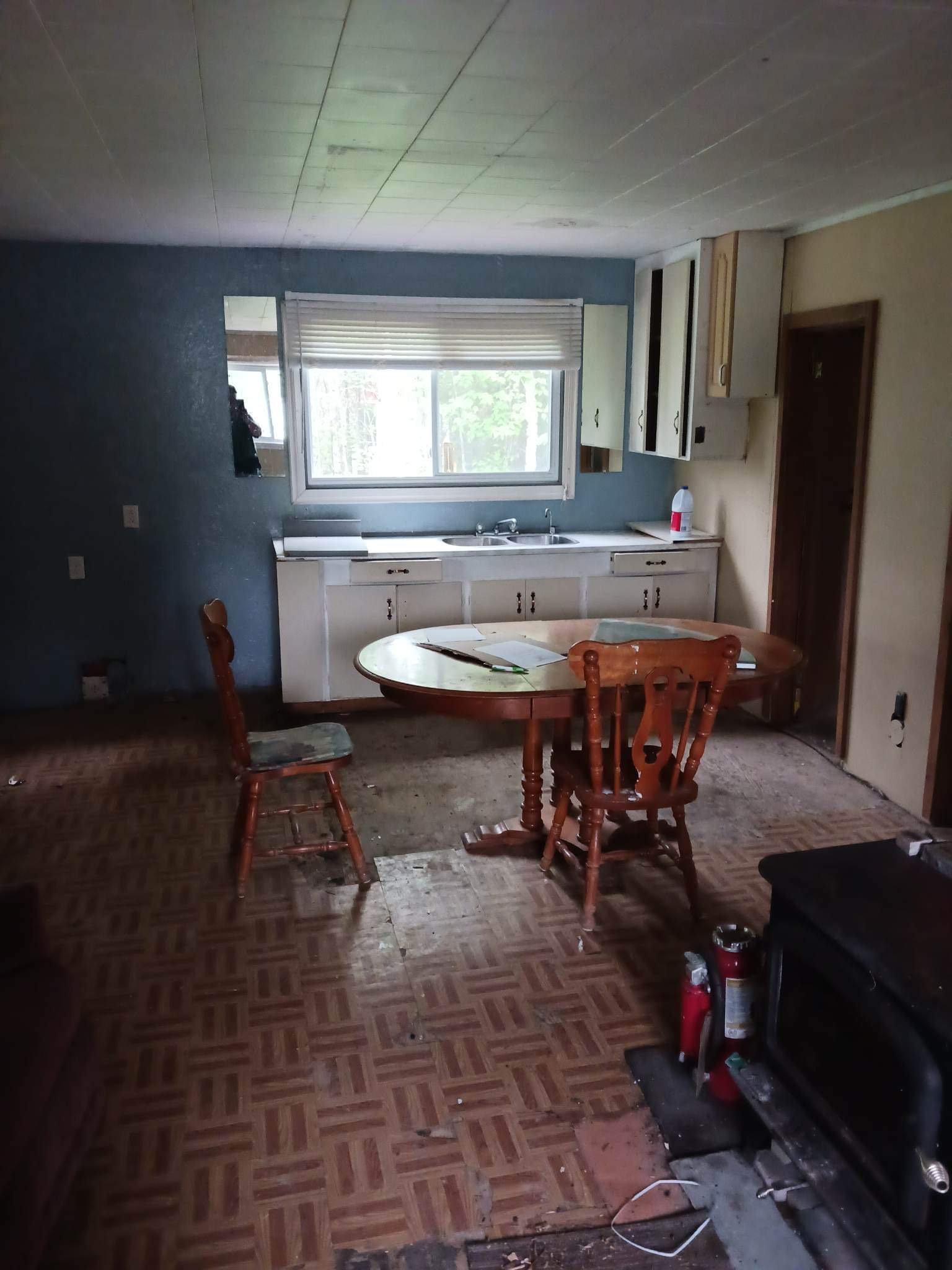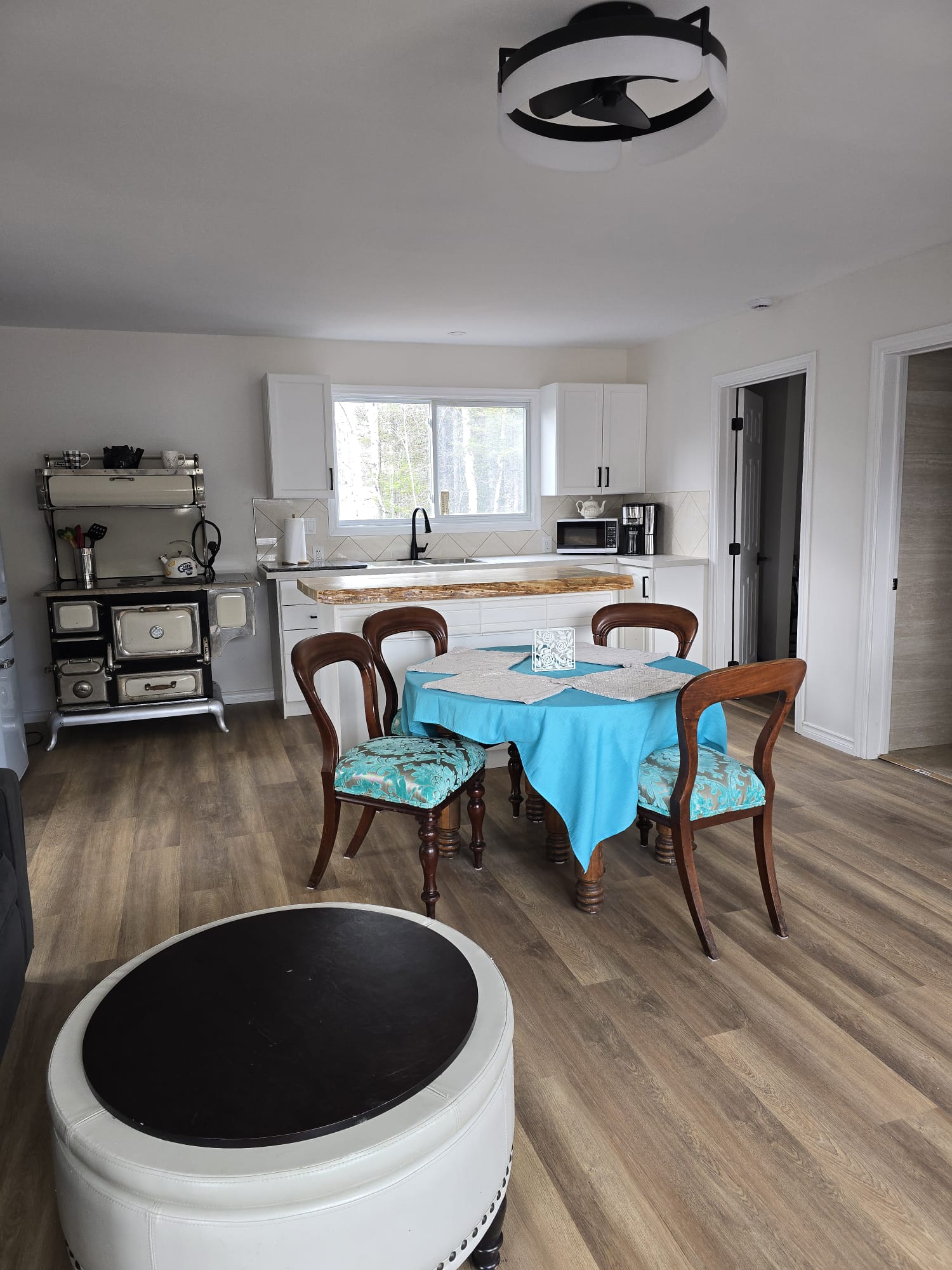
On September 3, 2026, I wrote to Stephen and Marlene Wagler on behalf of every cottage resident at Lac Gerard. The letter asked for one simple thing: return the rent increases you were never entitled to charge.
The background is the Landlord and Tenant Board’s order in Beaulne (July 29, 2026), which found that section 5(a) of the Residential Tenancies Act does not exempt our community, that the Act applies to our land lease homes, and that a landlord cannot unilaterally rewrite the deal into a seasonal campground simply because it skipped due diligence when it bought the place.
On that basis, the letter asked for the return of the $350 per-lot increase imposed when the Waglers bought the campground, plus the additional $200 per cottage collected for road maintenance. The lawful rents are $750 for road lots and $800 for waterfront lots. On assignment, a landlord may raise the rent by $50 — never double rents.
But the letter did more than ask for refunds. It put the Waglers on notice about administrative fines.
An administrative fine is not compensation. A rent abatement compensates a tenant for a breach. A fine is different: under the Board’s Guideline 16, it exists to encourage compliance with the RTA and to deter landlords from similar conduct in the future. It is not normally imposed unless a landlord has shown a blatant disregard for the Act and other remedies will not provide adequate deterrence.
The letter pointed to the case that shows how serious fines can get: Equity Builders (2025 ONSC 759). There, after a fire, a Sarnia landlord locked tenants out of their homes even after the city said most units were safe to reoccupy, refused them access to their belongings — including medication and baby furniture — pressured them to give up their tenancies for less than the statutory minimum, and defied a Board order putting them back in possession. The landlord had done the same thing before, after an earlier fire in 2010, when it was fined $500. That fine did not deter it. The Board fined it $35,000 per unit for 15 units — $525,000 in total. The Divisional Court upheld every dollar of it, holding that fine maximums apply per application, that fines are paid to the Board rather than to tenants, and that the Board’s decision to impose a fine is discretionary and entitled to considerable deference.
The letter drew the parallel plainly. It noted that 23 applications have been filed against the Waglers, all for what it calls indefensible breaches. It argued that the Waglers cannot credibly claim they did not know the RTA applied — the addition of the word ‘Seasonal’ to the lot leases at the time of purchase shows an intent to circumvent the Act from the start — and that Rachelle’s emails citing the law were ignored. It gave them until September 11, 2026 to return the money, failing which she would help every resident amend their applications to plead general damages and ask for administrative fines.
That is how a refund request becomes a warning about fines. The refund is the off-ramp: return what was never yours, and the matter can end there. Keep it after a clear Board ruling, and the residents’ next step is to ask the Board for the remedy designed for landlords who show blatant disregard — a fine, per application, meant to deter.
The refund request letter and the Equity Builders decision are linked below and on our legal precedents page.
All tenants can download any of the case law or my letter and upload them to the portal to assist their case.