LAC GERARD

A small campground on a quiet lake in Fauquier, Ontario — and the cottages we’re bringing back to life, one at a time.

Follow the story at Lac Gerard

Get an email when there’s a new post about the cottages and the campground.

Blog

  • November 4, 2026: Board Voids $1,300 Rent Increase at 1104 Fantham Road

    In LTB-T-061726-26, Rachelle Berube applied under section 135 of the Residential Tenancies Act, claiming the Waglers collected rent illegally at 1104 Fantham Road. The hearing was held by videoconference on October 28, 2026. The Waglers did not attend, although properly served, and the hearing proceeded on the tenant’s evidence.

    The Board found the lawful site rent was $750 per year, based on the lease term from June 1, 2024 and her April 23, 2026 acknowledgement letter. The Waglers’ new lease raising the rent to $1,300 per year effective June 1, 2026 is void, because no section 116 notice of rent increase was served — citing Honsberger v. Grant Lake Forest Resources, 2019 ONCA 44. She had paid the $1,300 for 1104 Fantham as part of a $2,400 e-transfer covering both 1104 and 1106 Fantham.

    From the order (Member Jin Zhang)

    Paragraph 8: Landlords and tenants cannot contract out of the RTA. A written agreement to raise the rent, without proper service of a notice of rent increase, is therefore unenforceable. The only exceptions are an agreement to increase the rent under section 121 or section 123.

    Paragraph 9: The Court of Appeal has confirmed this principle. An existing tenant who signs a new lease for the same unit is not a new tenant and does not begin a new tenancy, so the landlord must still give notice of the rent increase and the increase stays capped at the guideline (see Honsberger v. Grant Lake Forest Resources Ltd., 2019 ONCA 44, at paras. 28–29).

    Paragraph 10: After the Landlords took over the site, they issued a new lease for it (DOC-8375429; Exhibit 3). The lease raised the rent from $750.00 to $1,300.00 per year, effective June 1, 2026.

    Paragraph 12: I find that the rent increase of June 1, 2026, through the signing of a new lease agreement, is void. Therefore, the lawful annual rent remains $750.00.

    The order: the Waglers must pay $598 ($550 excess rent plus the $48 filing fee) by November 15, 2026, with 4% simple interest from November 16, 2026. She may alternatively deduct the $598 from rent due on or before May 31, 2027. Her $750 costs request was denied — the member found the Waglers’ non-attendance caused no undue expense or delay, and the failure to refund is part of the breach itself, not conduct in the proceeding.

    Note: this is a separate order from the two October 23, 2026 orders — the $398 owed to her for 1193 Fantham (LTB-T-062119-26) and the $598 owed to Mathieu Lambert-Belanger and Lee-Anne Tanguay for 1189 Fantham (LTB-T-062303-26).

    Read the full order (PDF)

  • How a Refund Request Became a Warning About Administrative Fines

    How a Refund Request Became a Warning About Administrative Fines

    On September 3, 2026, I wrote to Stephen and Marlene Wagler on behalf of every cottage resident at Lac Gerard. The letter asked for one simple thing: return the rent increases you were never entitled to charge.

    The background is the Landlord and Tenant Board’s order in Beaulne (July 29, 2026), which found that section 5(a) of the Residential Tenancies Act does not exempt our community, that the Act applies to our land lease homes, and that a landlord cannot unilaterally rewrite the deal into a seasonal campground simply because it skipped due diligence when it bought the place.

    On that basis, the letter asked for the return of the $350 per-lot increase imposed when the Waglers bought the campground, plus the additional $200 per cottage collected for road maintenance. The lawful rents are $750 for road lots and $800 for waterfront lots. On assignment, a landlord may raise the rent by $50 — never double rents.

    But the letter did more than ask for refunds. It put the Waglers on notice about administrative fines.

    An administrative fine is not compensation. A rent abatement compensates a tenant for a breach. A fine is different: under the Board’s Guideline 16, it exists to encourage compliance with the RTA and to deter landlords from similar conduct in the future. It is not normally imposed unless a landlord has shown a blatant disregard for the Act and other remedies will not provide adequate deterrence.

    The letter pointed to the case that shows how serious fines can get: Equity Builders (2025 ONSC 759). There, after a fire, a Sarnia landlord locked tenants out of their homes even after the city said most units were safe to reoccupy, refused them access to their belongings — including medication and baby furniture — pressured them to give up their tenancies for less than the statutory minimum, and defied a Board order putting them back in possession. The landlord had done the same thing before, after an earlier fire in 2010, when it was fined $500. That fine did not deter it. The Board fined it $35,000 per unit for 15 units — $525,000 in total. The Divisional Court upheld every dollar of it, holding that fine maximums apply per application, that fines are paid to the Board rather than to tenants, and that the Board’s decision to impose a fine is discretionary and entitled to considerable deference.

    The letter drew the parallel plainly. It noted that 23 applications have been filed against the Waglers, all for what it calls indefensible breaches. It argued that the Waglers cannot credibly claim they did not know the RTA applied — the addition of the word ‘Seasonal’ to the lot leases at the time of purchase shows an intent to circumvent the Act from the start — and that Rachelle’s emails citing the law were ignored. It gave them until September 11, 2026 to return the money, failing which she would help every resident amend their applications to plead general damages and ask for administrative fines.

    That is how a refund request becomes a warning about fines. The refund is the off-ramp: return what was never yours, and the matter can end there. Keep it after a clear Board ruling, and the residents’ next step is to ask the Board for the remedy designed for landlords who show blatant disregard — a fine, per application, meant to deter.

    The refund request letter and the Equity Builders decision are linked below and on our legal precedents page.

    All tenants can download any of the case law or my letter and upload them to the portal to assist their case.

  • Kennedy and Kennedy v. Wagler — LTB-T-052108-26

    Kennedy and Kennedy v. Wagler — LTB-T-052108-26

    Kennedy and Kennedy v. Wagler, LTB-T-052108-26, October 15, 2026 (Member Jana Rozehnal) — 1181 Fantham Road. Section 9(2) application to determine whether the Residential Tenancies Act applies. The tenants own their home and lease the land in Lac Gerard Campgrounds; they have lived there year-round for 5 or 6 years. The new landlords, who took possession June 1, 2026, tried to impose a 43% rent increase and add a clause calling the lease seasonal. The Board held the Act applies: “it is the use of the particular rental unit, not the overall use of the complex that determined whether the Act applies.” The Board also held: “The new Landlords are estopped from changing the agreement between original Landlord and the Tenants.”

    Read the full LTB order (PDF): Kennedy and Kennedy v. Wagler, LTB-T-052108-26

    See also: Land Lease Community Legal Precedents

  • Lambert-Belanger and Tanguay v. Wagler — LTB-T-062303-26

    Lambert-Belanger and Tanguay v. Wagler — LTB-T-062303-26

    Lambert-Belanger and Tanguay v. Wagler, LTB-T-062303-26, October 23, 2026 (Member Teresa Hunt) — Rent increase from $800 to $1,350 per year void. The Waglers owe Mathieu Lambert-Belanger and Lee-Anne Tanguay $598 by November 3, 2026.

    Read the full LTB order (PDF): Lambert-Belanger and Tanguay v. Wagler, LTB-T-062303-26

    See also: Land Lease Community Legal Precedents

  • Berube v. Wagler — LTB-T-062119-26

    Berube v. Wagler — LTB-T-062119-26

    Berube v. Wagler, LTB-T-062119-26, October 23, 2026 (Member Teresa Hunt) — Rent increase from $800 to $1,150 per year void (no valid N1 notice). Lawful annual lot rent $800. The Waglers owe Rachelle Berube $398 by November 3, 2026.

    Read the full LTB order (PDF): Berube v. Wagler, LTB-T-062119-26

    See also: Land Lease Community Legal Precedents

  • Beaulne and Parent v. Wagler — LTB-T-051018-26

    Beaulne and Parent v. Wagler — LTB-T-051018-26

    Beaulne and Parent v. Wagler, LTB-T-051018-26, August 20, 2026 (Member Angela Smith) — The RTA applies to the Lac Gerard campground; the section 5(a) exemption does not apply. The landlord is not permitted to unilaterally change the terms to convert the campground to seasonal or restrict a tenant’s right to use their lot at any time of year.

    Read the full LTB order (PDF): Beaulne and Parent v. Wagler, LTB-T-051018-26

    See also: Land Lease Community Legal Precedents

  • Three LTB Orders at Lac Gerard — What the Tribunal Actually Decided

    Three LTB Orders at Lac Gerard — What the Tribunal Actually Decided

    If you live in a land lease community, this is for you — not just for Lac Gerard. Three Landlord and Tenant Board orders have now decided, in plain terms, that the Residential Tenancies Act applies at Lac Gerard Campground in Fauquier, and that rent increases imposed without a proper notice are void. The full orders are linked below, so you can read them for yourself.

    1. Beaulne and Parent v. Wagler — August 20, 2026

    File: LTB-T-051018-26. Property: 1179 Fantham Road, Fauquier. Applicants: Tammy Beaulne and Benoit Parent. Respondents: Stephen Wagler and Marlene Wagler. Heard: July 29, 2026 — Issued: August 20, 2026, Member Angela Smith.

    Tammy Beaulne and Benoit Parent asked the Board to decide one question: does the Residential Tenancies Act apply to their lot? The Board said yes. The section 5(a) exemption — the one for living accommodation for the travelling or vacationing public, or occupied for a seasonal or temporary period — does not apply here.

    The order found that roughly 43 of the lots have permanent residential or seasonal buildings, the tenants lease the lot and own the structure on it, the campground is open year-round, the front gate is not locked, and the roads are plowed in winter. Ms. Beaulne’s home is a lakefront, single-storey home built in 1987, a permanent structure with a kitchen, dining room, living room, washroom and two bedrooms.

    The Waglers had bought the campground on June 1, 2026. They argued the use was seasonal and recreational. The Board found the agreement was not seasonal, had no period when the campground was closed or inaccessible, and did not require renters to maintain a permanent residence elsewhere.

    In the Board’s words: ‘The Respondents are not permitted to unilaterally change the terms of the contract to convert the contract to a seasonal campground or restrict the Applicant’s right to use their Lot at any time of the year simply because they did not complete their due diligence when they purchased the campsite or because they do not agree with the arrangement.’

    Order: The Residential Tenancies Act, 2006 applies to this rental unit.

    Full order: LTB-T-051018-26

    2. Berube v. Wagler — October 23, 2026

    File: LTB-T-062119-26. Property: 1193 Fantham Road, Fauquier. Tenant: Rachelle Berube. Landlords: Stephen Wagler and Marlene Wagler. Heard: October 21, 2026 — Issued: October 23, 2026, Member Teresa Hunt.

    The annual lot rent had been $800 in 2025. In 2026 the landlords required $1,150. No Notice of Rent Increase in the Board-approved form was served before the increase was required.

    The Board found the $350 increase was void, and the lawful annual lot rent remained $800. I had bought the home on the lot on June 23, 2026 and became the tenant, and succeeded to the claim for the rent collected contrary to the Act.

    Order: The landlords must pay $398.00 by November 3, 2026 — $350.00 excess rent plus the $48.00 filing fee. If it is not paid by then, simple interest runs from November 4, 2026 at 4.00% annually on the balance outstanding.

    Full order: LTB-T-062119-26

    3. Lambert-Belanger and Tanguay v. Wagler — October 23, 2026

    File: LTB-T-062303-26. Property: 1189 Fantham Road, Fauquier. Tenants: Mathieu Lambert-Belanger and Lee-Anne Tanguay. Landlords: Stephen Wagler and Marlene Wagler. Heard: October 21, 2026 — Issued: October 23, 2026, Member Teresa Hunt.

    The annual lot rent had been $800 in 2025. In 2026 the landlords increased it to $1,350 — a $550 increase — and the tenants paid it. No Notice of Rent Increase in the Board-approved form (Form N1) was served. The landlord’s position, as recorded in the order, was that he had just prepared a new lease with the increased amount, as he did not know the Act applied at the time.

    The Board found the increase did not comply with the Act and was void. The Board also relied on the Beaulne order, LTB-T-051018-26, which had already determined that the property is a land lease community governed by the Act and that the section 5(a) exemption does not apply.

    Order: The landlords must pay $598.00 by November 3, 2026 — $550.00 excess rent plus the $48.00 filing fee. If it is not paid by then, simple interest runs from November 4, 2026 at 4.00% annually on the balance outstanding.

    Full order: LTB-T-062303-26

    What this means if you live in another land lease community

    These three orders, read together, say three simple things:

    1. Owning your cottage and leasing the lot does not take you outside the Residential Tenancies Act. A land lease community can be governed by the Act.
    2. A landlord cannot turn a year-round arrangement into a seasonal one just by calling it seasonal, or by buying the park and changing the rules.
    3. A rent increase has to follow the Act — proper notice, in the approved form. An increase imposed without it is void, and the excess can be ordered repaid.

    That is what these orders decided, on these facts. It is not legal advice, and every community’s contracts and history are different. But if you are being told the Act does not apply to you, or that a large increase is simply the new rent, these orders are worth reading.

    — Rachelle
  • Lac Gerard is covered under Residential Tenancies Act.

    How did I know that Lac Gerard land lease Community was covered under the RTA?

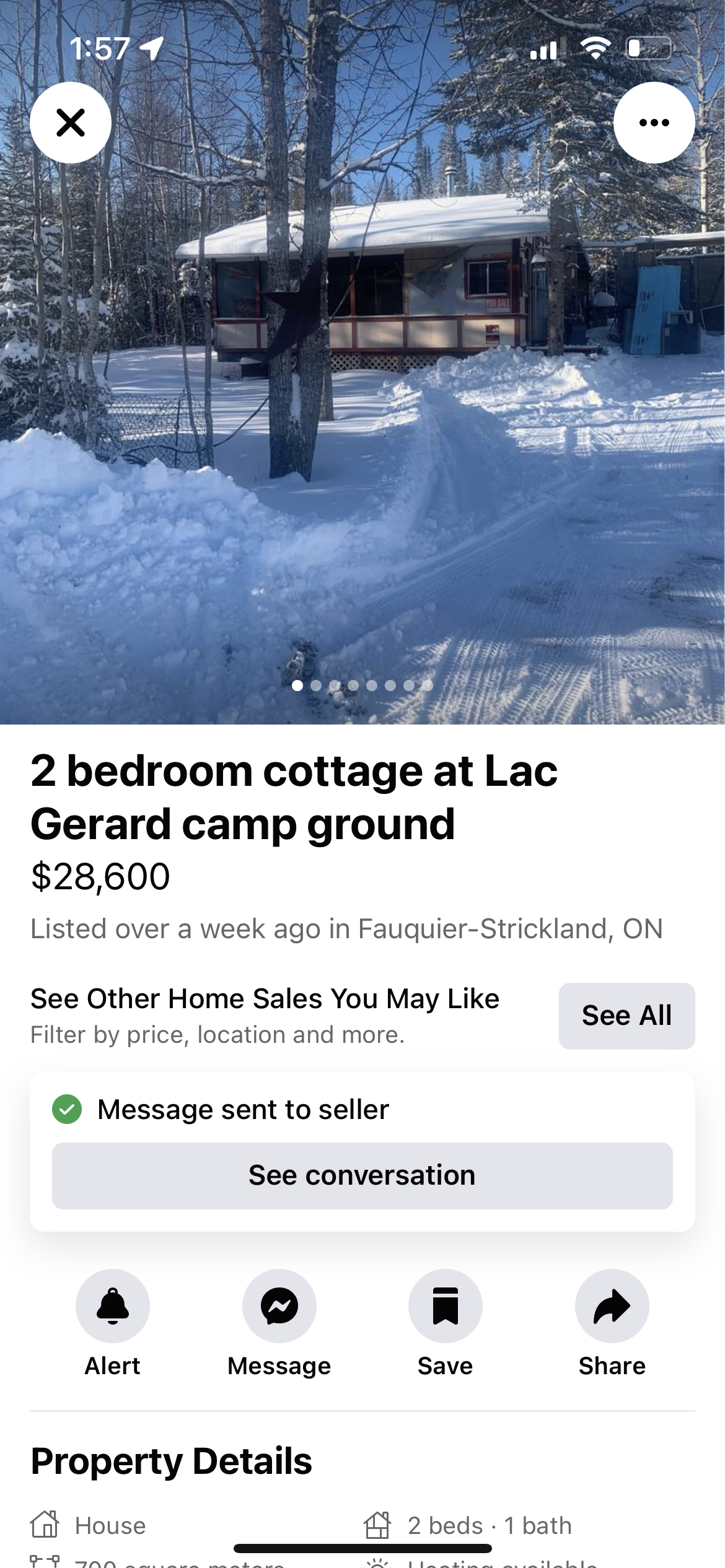
    Simple, I first spotted 1104 Fantham Road for sale on Facebook, by a guy named Mike Arkilander, and I was going to buy it off him for $22,000. I spoke to Yolande and I was approved to purchase the cottage, then Mike raised the price.

    So I called Yolande and told her what happened and that I wouldn’t be buying the place unfortunately.

    That’s when I found out that Yolande and Mike were having problems, and they were going to the Landlord and Tenant Board.

    They came to some sort of agreement at the Landlord and Tenant Board, and Yolande called me and asked me if I still wanted the cottage. I said yes and the rest is history.

    I knew more than the average person about the RTA and I had done some legal research on properties that are exempt from the RTA, and the top case law on that distinction is Matthews et al. v. Algoma Timberlakes Corporation

    It’s a description of the Lac Gerard site, open all the time, people living there all seasons when they want.

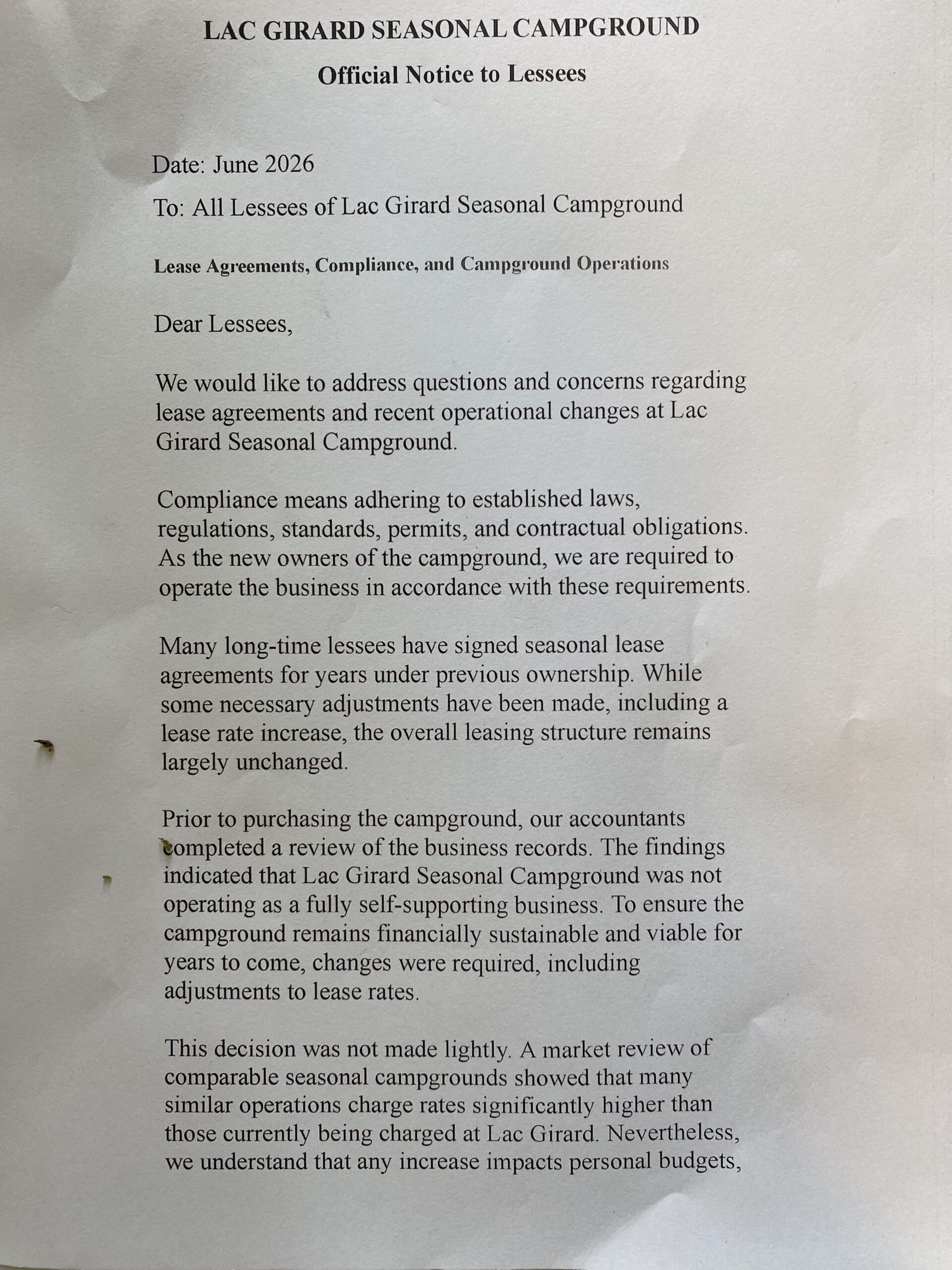
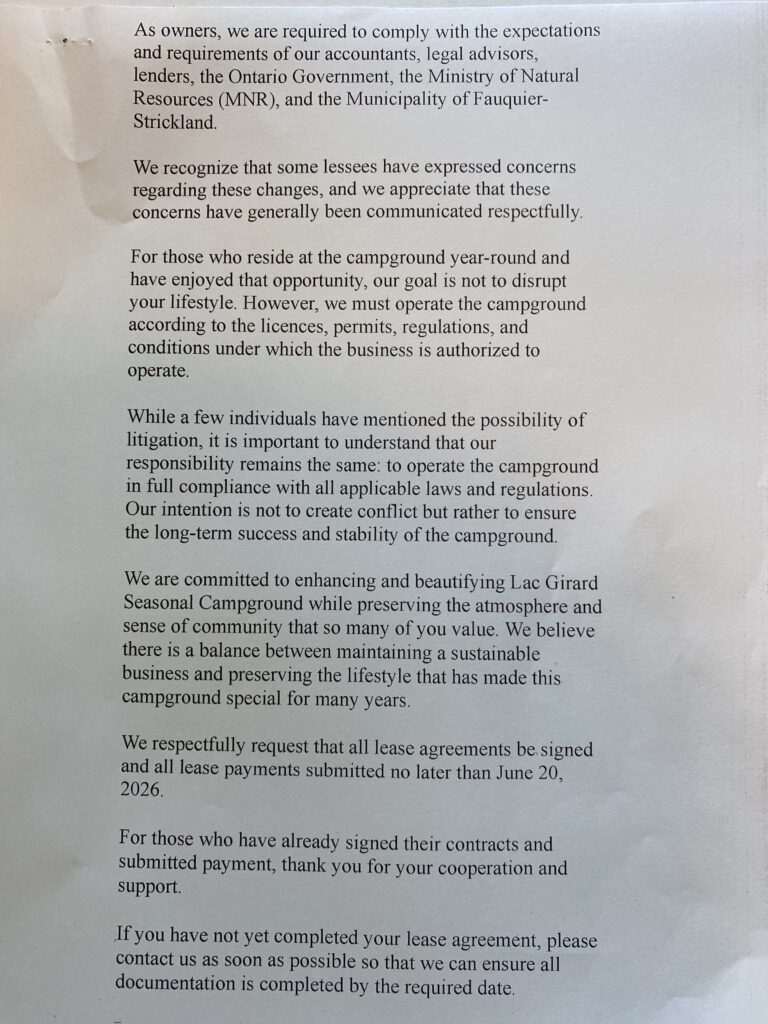
    All was well until the Wagler’s bought the land May 21 2026. They didn’t waste any time, they stepped right into it with an 43% or 46% illegal rent increase right off the bat while writing the residents a letter that we had to follow the rules….

    Page One of First Letter

    What a bunch of clowns.

    Sale Price was $400,000

    They paid $400,000.00 for the entire site and with the existing rents they would have been paid back in full in 6 years, if they want to add new business, they can add new business to make more money.

    Instead, they just pissed everyone off.

  • The $22,000 Cottage

    The $22,000 Cottage

    In the summer of 2023, I bought a cottage. Not the kind of cottage purchase that makes the news — this one cost $22,000.

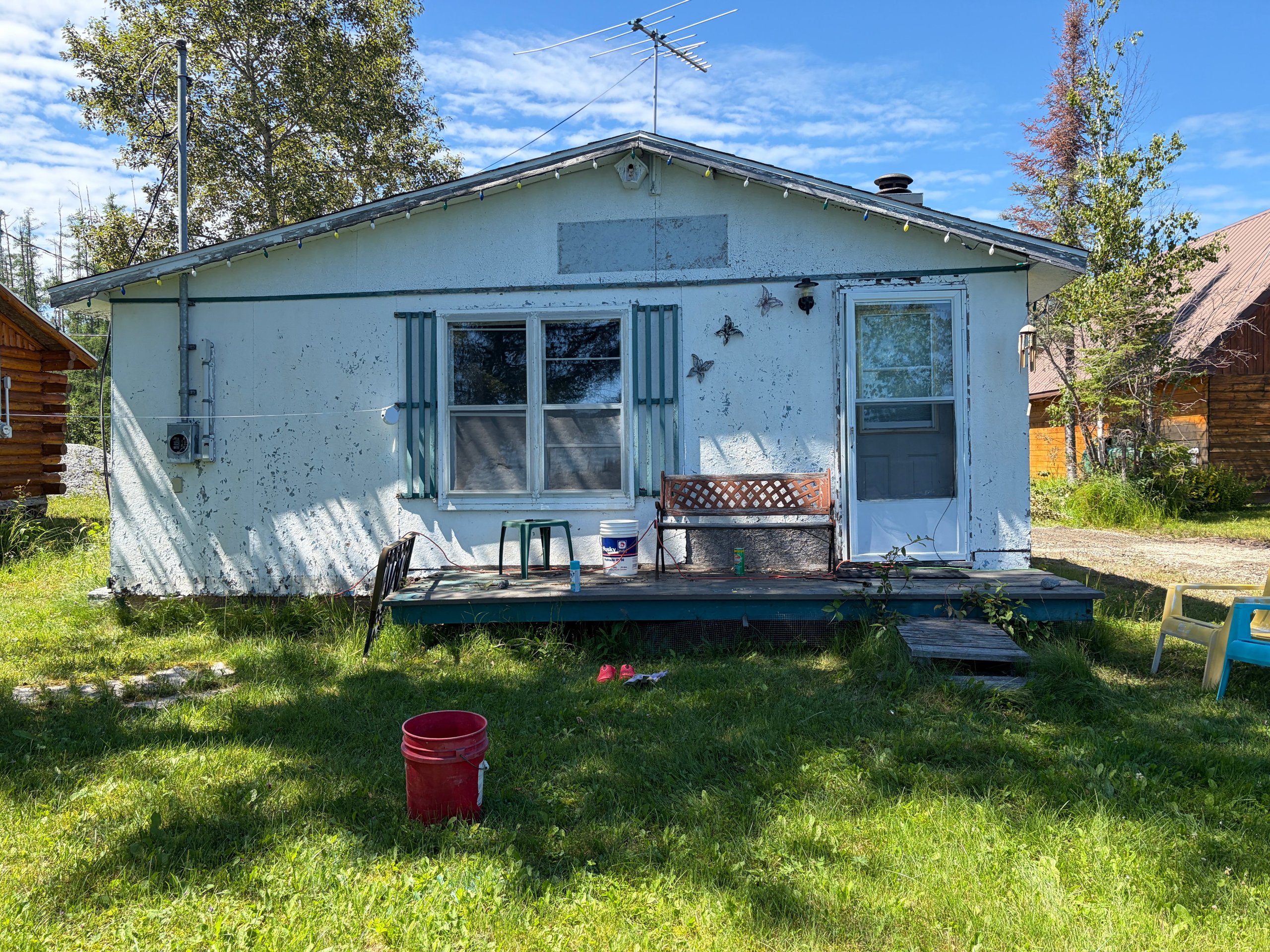
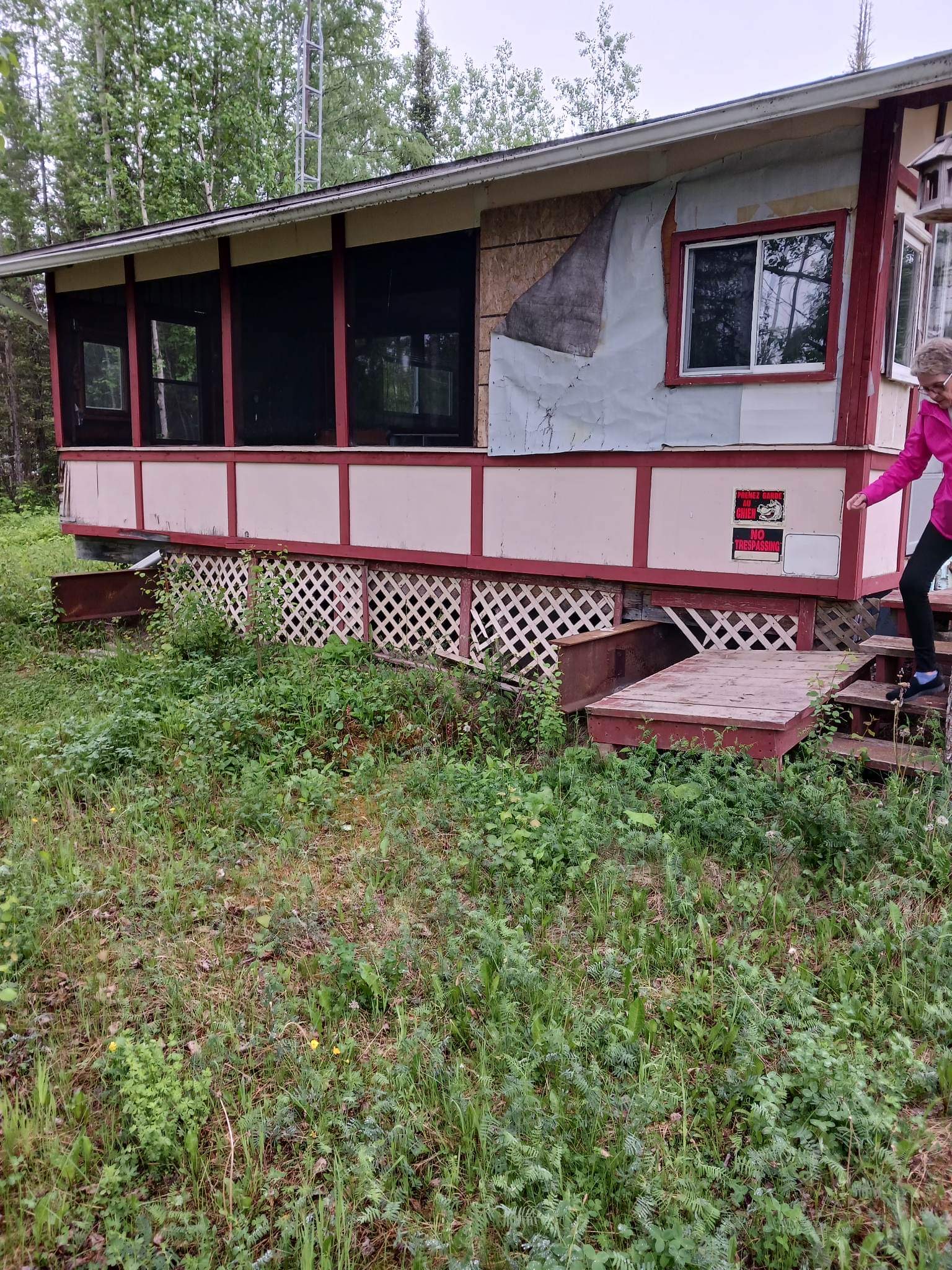
    1104 Fantham Road sits in Lac Gerard Campgrounds, a land lease community in Fauquier, in Northern Ontario. That’s how these places work: you own the cottage, and you lease the lot it sits on. The cottage is a two-bedroom, and when I bought it from Yolande Fantham, it was… let me be kind. It was tired.

    1104 Fantham Road, as I found her in 2023.
    1104 Fantham Road, as I found her in 2023.

    The tar paper was peeling off the wall. The yard had gone to weeds. The paint had faded to a colour nobody would choose on purpose. But the bones were there, the lake was there, and the price was right.

    Truth is, this is the kind of project I love. The more derelict, the better — I have a real passion for taking the places everybody else walks away from and bringing them back. This one tested it: it took six months just to get the electricity turned on. Six months. But that’s the work. Anybody can buy a pretty cottage; it takes a certain kind of stubborn to rescue one.

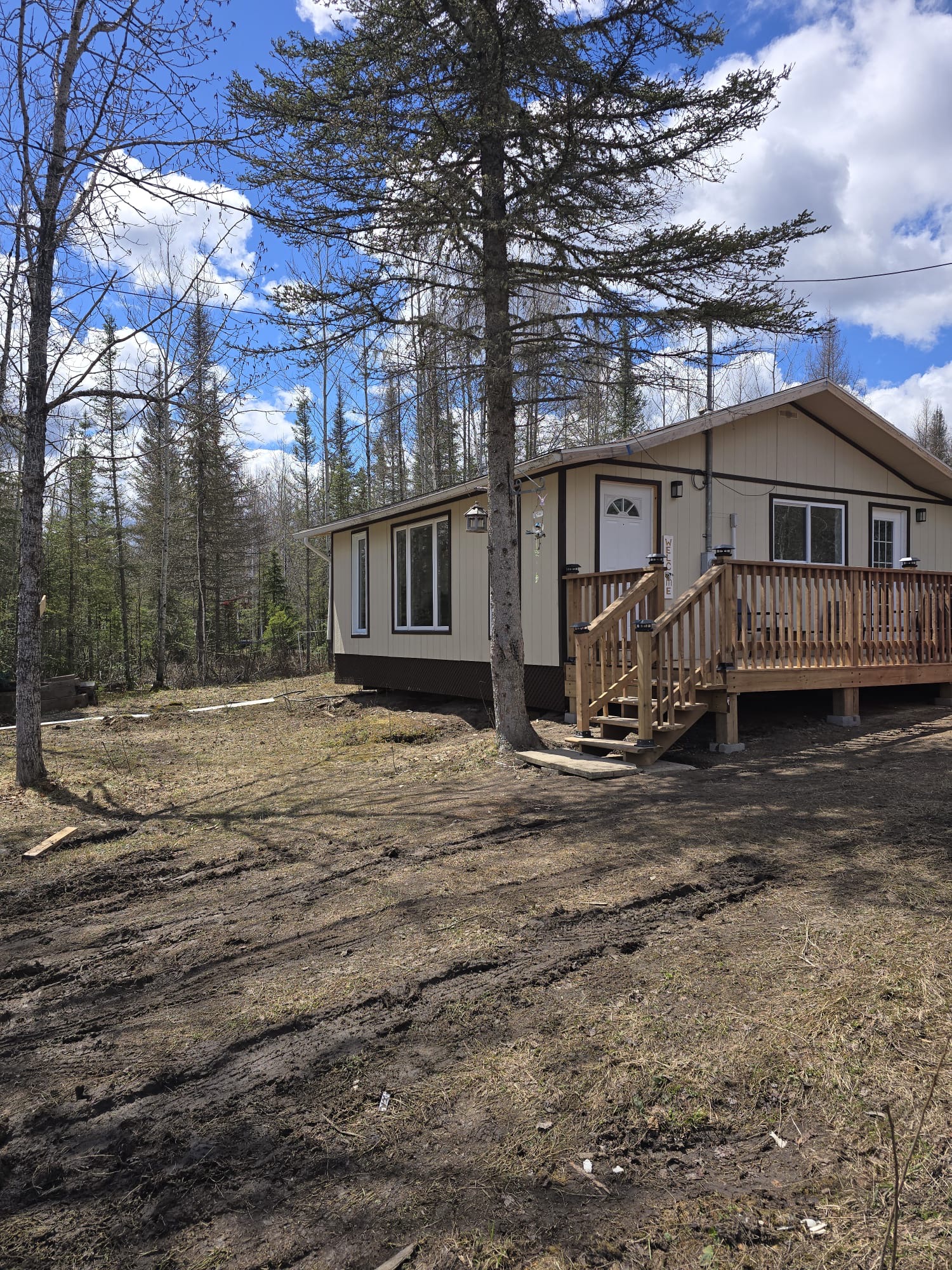
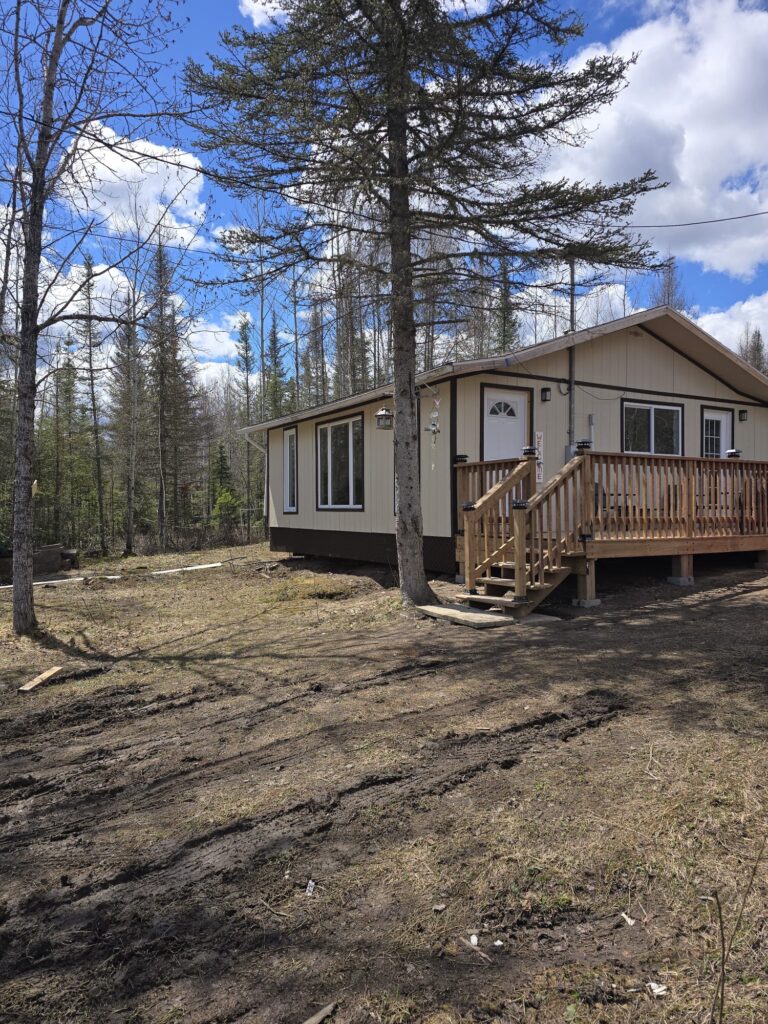
    So that’s what happened. New siding and trim, new windows, a proper deck with stairs you can trust, a real kitchen, a bright sunroom, and a lot of cleaning in between.

    Same cottage, after. New siding, new windows, new deck.
    Same cottage, after. New siding, new windows, new deck.
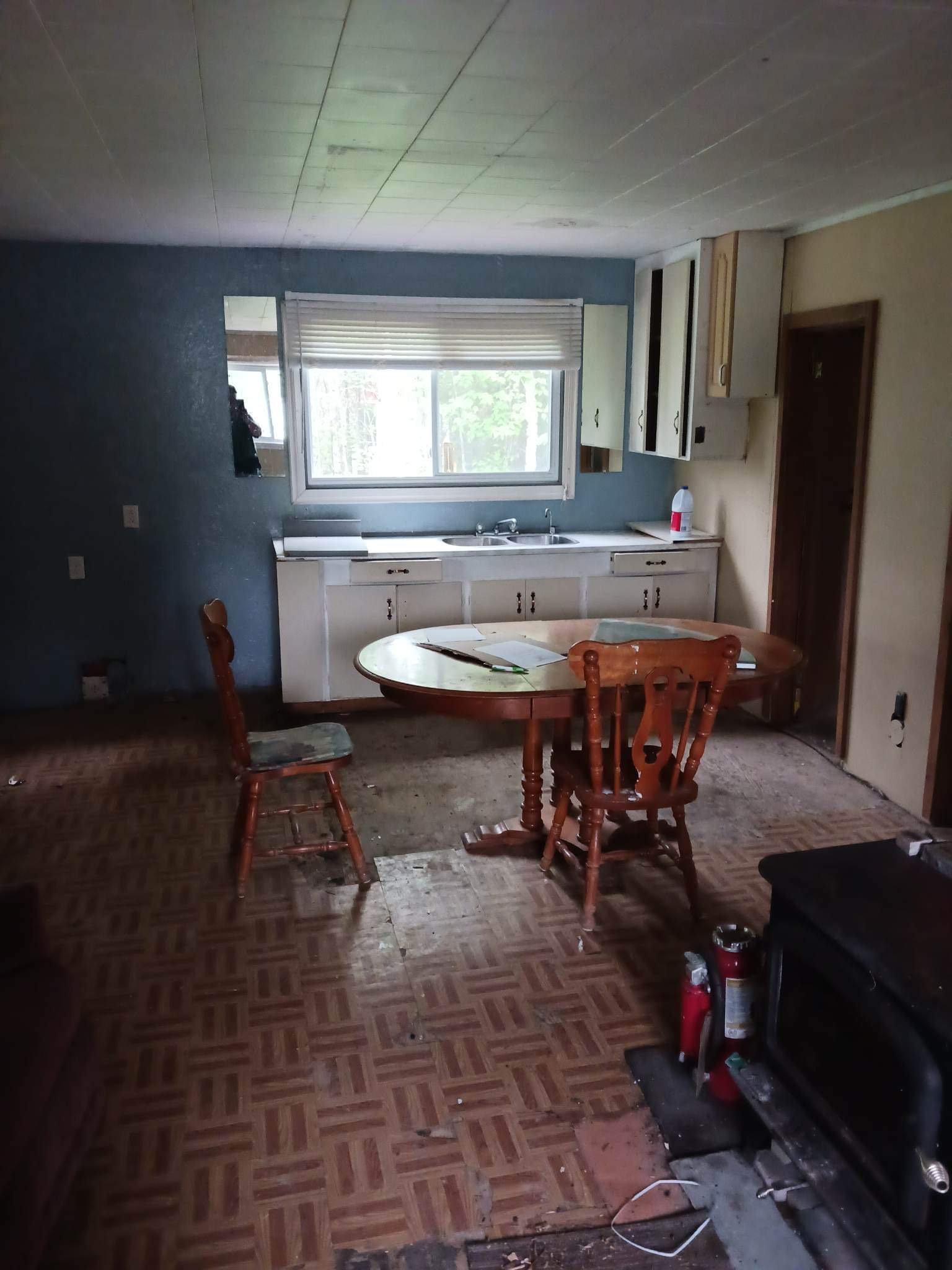
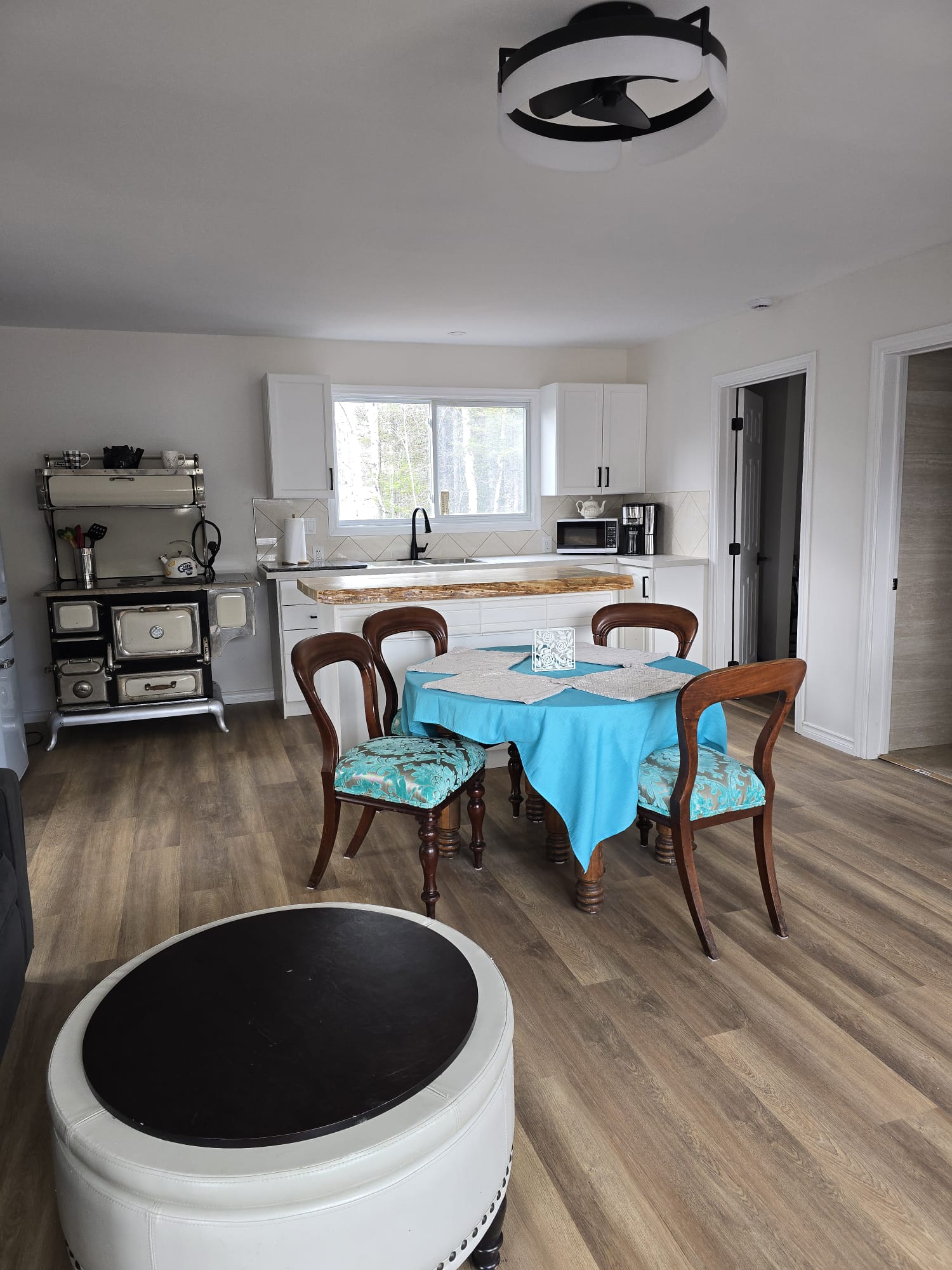
    Kitchen, before.
    Kitchen, before.
    Kitchen, after.
    Kitchen, after.
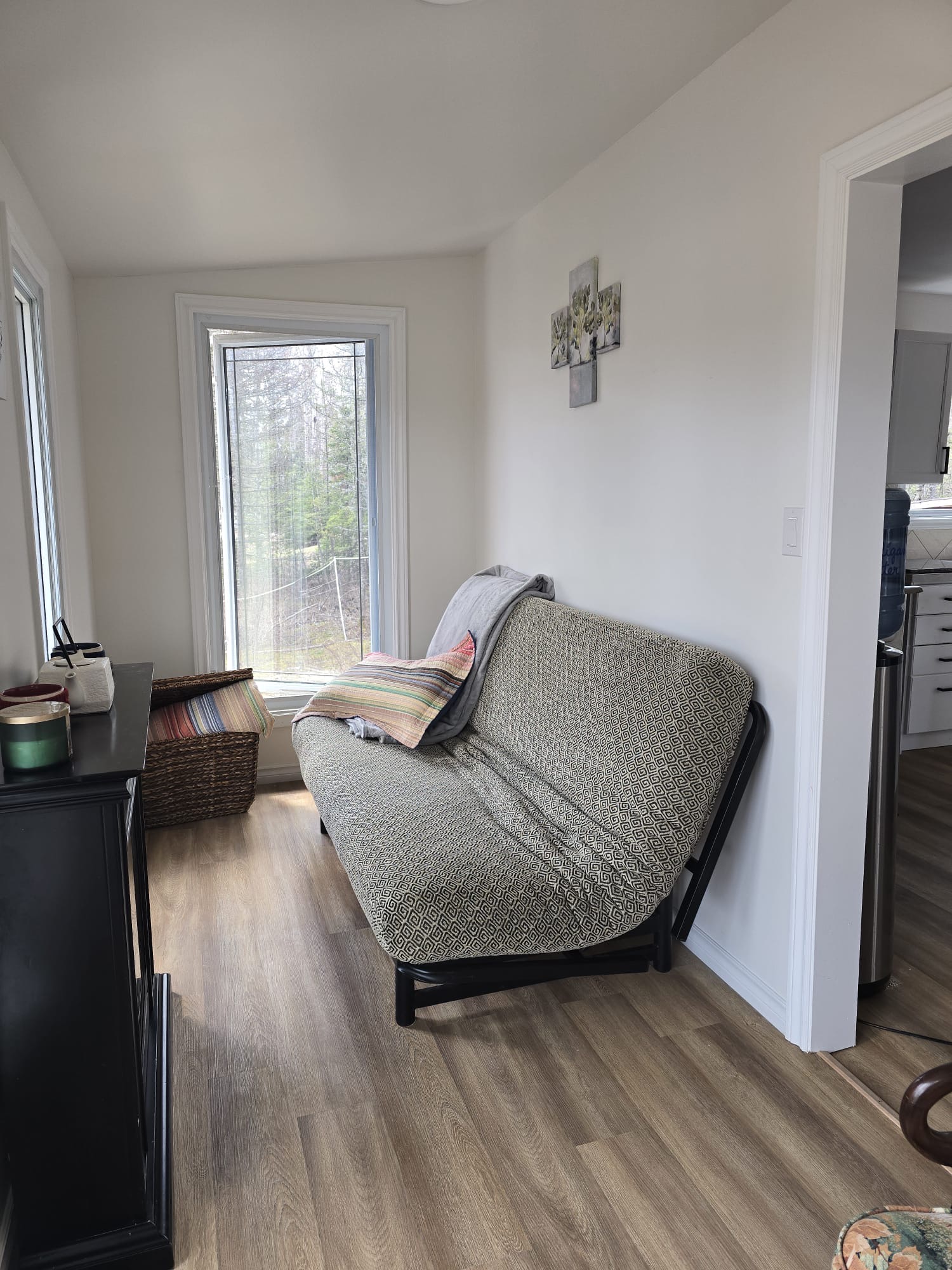
    The sunroom — the best seat in the house.
    The sunroom — the best seat in the house.

    These days she’s a proper little northern getaway. The neighbours are quiet. One of them is a moose.

    The neighbour.
    The neighbour.
    And a young bald eagle keeping watch. (Photo by Susy Daneault.)
    And a young bald eagle keeping watch. (Photo by Susy Daneault.)

    And if you ever come up to visit, make the trip to the town dump. I know how it sounds. But the bald eagles hold court there like they own the place — half a dozen of them, most days. Around here, that’s a tourist attraction. Worth a visit.

    The welcoming committee at the Fauquier town dump. (Photo by Susy Daneault.)
    The welcoming committee at the Fauquier town dump. (Photo by Susy Daneault.)
    Management. (Photo by Susy Daneault.)
    Management. (Photo by Susy Daneault.)

    And up the highway in Smooth Rock Falls, the dump there has bears. Big ones. They sit on the piles like they pay taxes on them.

    Smooth Rock Falls management. (Photo by Rachelle Berube.)
    Smooth Rock Falls management. (Photo by Rachelle Berube.)
    And the smallest neighbour, who runs the deck.
    And the smallest neighbour, who runs the deck.

    More stories from Lac Gerard to come — the lake, the birds, and how a Toronto property manager ended up owning cottages up here. One post at a time.

    — Rachelle